Skip to content
IPTV channels are the foundation of every streaming subscription you’ll encounter in 2026, yet most service pages gloss over what you’re actually getting. The headline numbers are bold, the promises are generous, and the asterisks are tiny. If you’ve ever subscribed to a service only to find that half the categories you care about are either missing or unwatchable, you’ll know exactly how that feels.
This guide cuts through the marketing noise. You’ll find honest data on how UK IPTV channel catalogues are structured, what streaming quality claims really mean in practice, and which technical factors separate a service worth paying for from one that buffers its way through a crucial match. Whether you’re switching from a traditional satellite package or exploring IPTV for the first time, the goal here is simple: give you the full picture before you spend a penny.
By the end you’ll understand not just the numbers, but the quality behind them. That distinction matters more than most ads will ever admit.
Key Takeaways
- Many services advertise large channel counts while quietly omitting entire genre categories, so always ask for a genre breakdown before subscribing.
- True 4K streaming requires a sustained downstream connection of at least 30 Mbps, with 35-40 Mbps recommended during peak-hour live sports.
- Catch-up functionality and a reliable EPG are often more important to day-to-day satisfaction than raw channel numbers.
- VIP server infrastructure with anti-freeze technology is what separates genuine HD and 4K delivery from compressed streams labelled as such.
- Longer subscription plans offer significant savings, with annual plans potentially reducing your monthly cost to a fraction of traditional TV packages.
Why IPTV Channels Ads Don’t Tell the Whole Story
When an IPTV service advertises thousands of UK channels, that figure is technically true but functionally misleading. The total count includes every variant, every regional feed, and every duplicate stream, while the categories that actually matter to you, such as reliable live sports channels, dedicated entertainment channels, and a solid kids section, may be thin or entirely absent. Understanding IPTV what channels you’re actually getting requires looking past the headline number.
Here’s a pattern that appears across the industry. A provider promotes a massive lineup but when you load the app, regional variants of the same channel account for a large chunk of the total. You might see the same news feed listed under four different regional labels, each occupying a separate slot in the count. Meanwhile, an entire genre you specifically wanted, documentary channels, for instance, or international sports feeds, is nowhere to be found.
Missing categories tend to follow a predictable pattern. The most commonly omitted groups include:
- Regional channel variants beyond the main hubs
- Specialist sports feeds covering non-mainstream events
- Dedicated entertainment sub-genres such as classic TV, drama, and reality
- International news channels beyond the major English-language services
- Niche kids categories split by age group
The lesson here is not that high channel counts are worthless, but that they need context. A service publishing a transparent genre-by-genre breakdown is showing you something. One that only promotes a total figure is hiding something. Always ask for the breakdown.

Real-World Channel Counts and Genre Splits (2026 UK Data)
Top-rated UK IPTV providers in 2026 typically divide their catalogue across seven or eight core genre categories. Understanding the typical split helps you benchmark any service you’re considering and identify gaps before committing to a subscription.
How a Genuine Catalogue Is Structured
A credible service will publish something close to the following distribution across its live TV channels. The exact numbers vary, but the categories themselves are non-negotiable for a full-service offering:
| Genre Category | What to Expect | Quality Standard |
|---|---|---|
| Live UK TV | Main national channels plus regional variants | HD minimum |
| Sports channels | Multiple dedicated feeds including PPV | HD, FHD, 4K available |
| Entertainment channels | Drama, reality, lifestyle, classic TV | HD minimum |
| Movie channels | Dedicated movie feeds by genre | HD, FHD |
| News channels | UK and international news feeds | HD |
| Kids channels | Age-split categories with animation and education | HD |
| Documentary channels | Nature, history, science, true crime | HD, FHD |
| International channels | Multi-language feeds for diaspora communities | SD to HD |
A common marketing trick worth flagging is labelling heavily compressed HD streams as “4K.” This is widespread in 2026 and it’s one of the most damaging forms of misrepresentation a service can engage in. You’re not getting a better picture; you’re getting a badge on a disappointing stream. Knowing the genre breakdown is useful, but knowing the actual bitrate behind each category is what separates informed buyers from disappointed ones.
Streaming Quality – What “4K” Really Means in 2026
Genuine 4K IPTV requires three things working together: adequate bitrate from the provider’s servers, stable encoding infrastructure, and sufficient bandwidth on your end to receive and process the stream without dropping frames. If any one of these fails, the “4K” label on the channel listing is meaningless.
The Bandwidth Reality
A sustained downstream connection of at least 30 Mbps is required for reliable 4K live sports streams on UK IPTV in 2026. Most providers with honest infrastructure recommend 35-40 Mbps to accommodate bitrate spikes during high-action moments, since live sports encoding is inherently dynamic. Pause-heavy content like a documentary is easier on your connection than a rapid-fire football match where frames change every fraction of a second.
Here’s what the numbers look like in practice:
- SD streaming: 3-5 Mbps sufficient
- HD streaming (720p): 8-10 Mbps recommended
- FHD streaming (1080p): 15-20 Mbps recommended
- True 4K streaming: 30-40 Mbps sustained, with headroom for spikes
- 8K streaming: 80 Mbps or above, with a wired connection strongly advised
How to Spot Fake 4K
If the picture falls apart during busy events, the “4K” label means nothing. There are practical ways to verify quality before you commit. During a free trial, load a sports channel during a live event in the evening. If you see pixelation, macro-blocking, or sudden quality drops, the stream is being delivered at a lower bitrate than advertised. True 4K maintains consistent sharpness even when the encoding load spikes.
Another indicator is the app’s stream quality selector. A genuine 4K service will show you measurable bitrate options rather than simply a label. Services that use the word “4K” without technical transparency are almost always relying on marketing rather than infrastructure.
Understanding how Internet Protocol Television delivers streams over IP networks helps clarify why bitrate and server infrastructure matter so much to the final picture quality you actually see on screen.
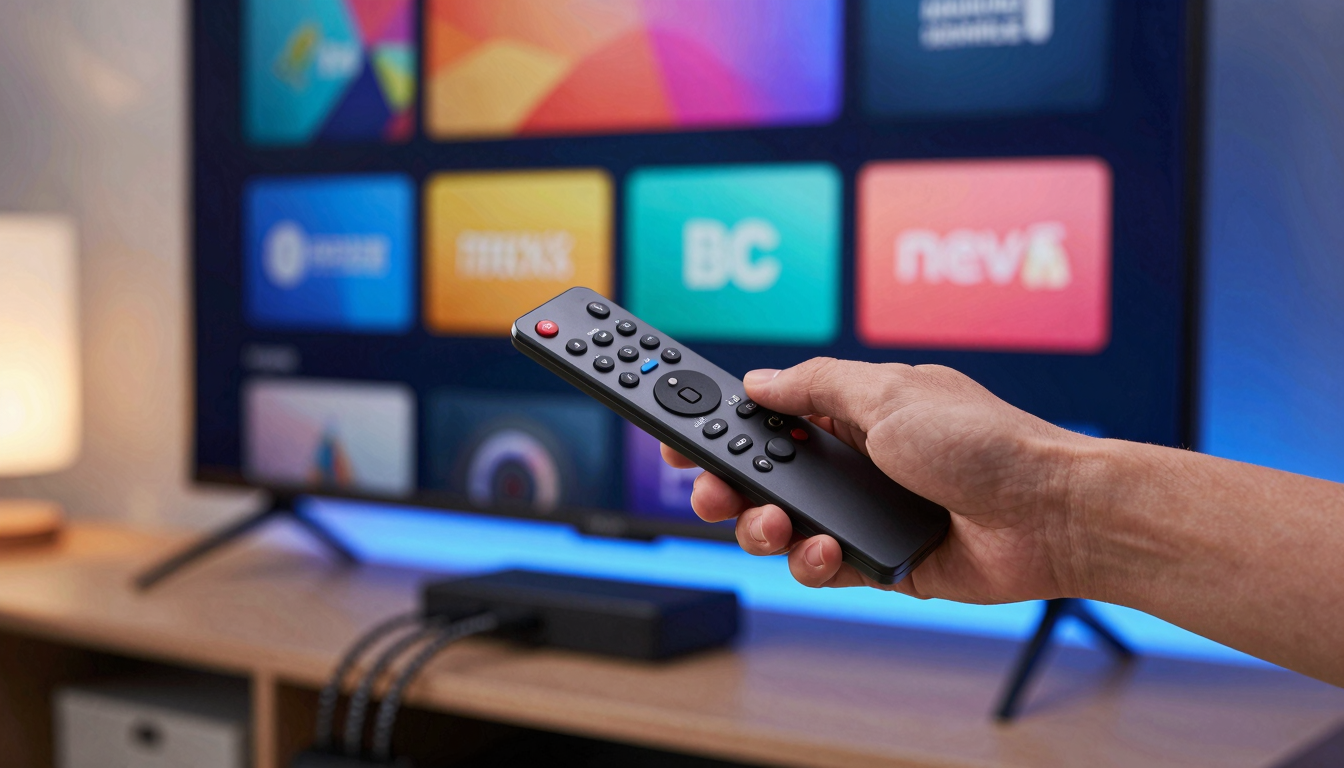
Supported Devices – Watch on Smart TV, Fire Stick, MAG Box and More
Device compatibility is a core part of the channel experience, not an afterthought. A service might offer 40,000 live TV channels, but if it doesn’t support the device sitting in your living room, those numbers are academic.
Devices Typically Supported by Premium UK IPTV Services
Modern UK IPTV services are designed to work across the full range of consumer devices. Here’s what a well-rounded service supports:
- Smart TVs: Samsung (Tizen), LG (webOS), Sony and Philips (Android TV). Most use a dedicated app or M3U playlist loaded through the TV’s app store.
- Amazon Fire Stick and Fire TV: One of the most popular options in the UK. Apps can be sideloaded in minutes, and performance on a Fire Stick 4K Max is solid for FHD and 4K content. See our full IPTV Firestick installation guide for step-by-step instructions.
- MAG Boxes: Dedicated IPTV hardware that connects directly to your TV via HDMI. MAG boxes load playlists natively and are favoured by users who want a dedicated, always-on setup without relying on a multipurpose device.
- Android Boxes: Versatile devices running full Android that support a wide range of IPTV player apps.
- iOS and Android phones and tablets: Ideal for mobile viewing. Most services offer dedicated apps or support standard player apps available from both major app stores.
- Windows and Mac PCs: Supported via dedicated desktop apps or web-based players, useful for watching at a desk or projecting from a laptop.
For setting up on Smart TVs and Fire Stick devices, IPTV Smarters Pro is a popular player that works across multiple platforms with a clean interface and reliable EPG support.
VIP Servers and Anti-Freeze Technology – Why They Matter for Channel Reliability
VIP server infrastructure with anti-freeze technology is what determines whether your live sports channels stay sharp during a final or crumble at the worst possible moment. This is the technical layer that separates a premium service from a budget one, and it’s where most of the real cost difference comes from.
What Anti-Freeze Technology Actually Does
Anti-freeze systems work by maintaining a secondary buffer at the server level. When a spike in demand hits, as it does during major sporting events or PPV broadcasts with thousands of simultaneous viewers, the system redistributes load across multiple server nodes rather than queuing streams behind a bottleneck. You don’t see this happening. What you experience instead is smooth, uninterrupted playback.
Without this infrastructure, streams are delivered from a single point. When that point becomes overwhelmed, you see freezing, buffering spinners, and quality drops. If the picture falls apart during busy events, the “4K” label means nothing, and neither does the channel count. A service with 10,000 channels that freeze during a big game is worth less in practice than a smaller, rock-solid catalogue.
Load Balancing and Uptime Guarantees
Load balancing distributes traffic intelligently across server clusters. Premium services target 99% uptime or higher, which translates to fewer than four days of downtime per year across all channels. That figure matters because live TV is time-sensitive. Missing the first half of a match because the stream went down isn’t recoverable. You can’t rewind live sports the way you can on-demand content.
When evaluating a service, ask specifically about their server redundancy and what happens during peak PPV events. A confident answer backed by infrastructure details is a good sign. Vague reassurances are not.
Catch-Up and EPG – The Unsung Heroes of a Great Channel Experience
Catch-up and EPG quality matter more than people expect, yet they’re rarely mentioned in service comparisons. Most buyers focus on channel counts and price. They discover the importance of these features about two weeks into their subscription.
Why the EPG Matters More Than You Think
An Electronic Programme Guide is the TV listings grid built into your IPTV app. When it works well, you can browse upcoming shows, set reminders, and navigate live channels without scrolling through a raw playlist of hundreds of entries. When it works poorly, or doesn’t update reliably, finding what you want becomes a chore. On a service with 40,000 channels, a broken EPG is genuinely disorienting.
A good EPG will:
- Show at least 7 days of upcoming programming per channel
- Update automatically without requiring manual refresh
- Display accurate start and end times for live events
- Integrate with catch-up so you can click a past programme and play it directly
How Catch-Up Transforms the Service
Catch-up allows you to access content from the past 7 to 30 days depending on the service. It effectively turns a live TV service into a library. Missed a documentary that aired at midnight? Catch-up has it. Want to watch an early-morning international sports event at a more civilised time? Catch-up solves that too.
Not all catch-up implementations are equal, though. Some services offer catch-up on only a fraction of their channels. Others have a catch-up window of just 24 hours, which is practically useless for any schedule that doesn’t match your routine. Before subscribing, test how many channels actually have catch-up enabled and how far back the archive goes.
If you’re comparing services based on overall value, our guide to what to expect from an IPTV subscription UK covers these practical details in full.
Privacy and Anonymity – What a Premium Service Protects
A credible IPTV service handles your personal data with the same care you’d expect from any legitimate subscription platform. Understanding what data a service collects, stores, and retains is a reasonable question for any paying customer to ask.
What Good Data Practices Look Like
Premium services typically operate with a minimal data retention policy. This means they collect only what’s necessary to provision your account, process your payment, and provide support. They don’t store viewing histories beyond what’s needed for features like catch-up, and they don’t sell user data to third parties.
When it comes to your connection, quality services route streams through infrastructure that doesn’t expose your home IP address unnecessarily. Some users choose to combine their IPTV subscription with a VPN for an additional layer of connection privacy, separating their streaming traffic from general browsing activity. This is a personal preference rather than a requirement, but it’s worth knowing the option exists.
Secure Payment Options
Look for services that accept multiple payment methods including card, PayPal, and cryptocurrency where available. Multiple options indicate an established operation. A service that only accepts untraceable payment methods with no invoice or receipt is worth approaching with caution. Transparency in transactions is a basic marker of a trustworthy provider.

Pricing and Plan Comparison – The Real Value of Longer Subscriptions
Monthly IPTV plans typically cost between £10 and £15 compared to traditional TV packages that run from £60 to £80 per month. That gap is significant enough on its own, but the savings compound further when you consider longer-term subscription plans available from premium providers.
British IPTV Pricing Breakdown
British IPTV is transparent about its pricing structure, which is worth highlighting in a market where hidden fees and automatic renewals are common. Here’s how the plans break down:
| Plan Duration | Total Price | Effective Monthly Cost | Saving vs Monthly |
|---|---|---|---|
| 1 Month | £12 | £12.00 | Baseline |
| 3 Months | £25 | £8.33 | Save £11 |
| 6 Months | £35 | £5.83 | Save £37 |
| 12 Months | £50 | £4.17 | Save £94 |
The annual plan at £50 effectively delivers a full year of 40,000+ live TV channels, 200,000+ movies and series, 4K and 8K streams, all PPV events, and 24/7 support for less than the cost of a single month on most traditional packages. That’s not a promotional spin; it’s the arithmetic.
For new users who want to verify quality before committing, a free trial is available. This is the sensible starting point, and our IPTV free trial UK guide explains exactly what to test during that window to make an informed decision. If you’re ready to compare plans in more detail, the buy IPTV UK guide walks through the full process.
The recommendation from an experienced perspective is to start with one month if you’re genuinely uncertain, but run the free trial first. If the streams hold up during evening peak hours on sports channels, the quarterly or annual plan offers substantially better value for what is demonstrably the same service.
For a deeper breakdown of how to choose the right provider rather than just the right price, the guide to the best IPTV service UK covers the technical evaluation criteria that actually matter.
Making Sense of IPTV Channels in 2026
The world of IPTV channels is more nuanced than any homepage headline suggests. Raw channel counts are a starting point, not a conclusion. What matters is whether the genres you care about are genuinely present, whether the streams hold quality under real viewing conditions, and whether the infrastructure behind the service can deliver on its promises during the moments that count most.
You now know what to look for: a transparent genre breakdown, honest streaming quality standards backed by proper bitrate, solid EPG and catch-up functionality, and a pricing structure that reflects genuine value rather than introductory discounts that vanish on renewal. The services that are confident in their infrastructure will always offer a free trial. That confidence is itself a signal worth paying attention to.
Start with the trial. Test during peak hours. Check the EPG. Play a sports channel during a live event. The answers you need will be obvious within the first evening.
📲 Get British IPTV via WhatsApp – 24/7 UK Support
Free trial available. No contracts. Money-back guarantee.
Frequently Asked Questions About IPTV Channels
How many channels does a quality UK IPTV service typically offer in 2026?
Top-rated UK services in 2026 offer anywhere from 20,000 to over 40,000 live TV channels depending on the tier. The more useful figure is how those channels are distributed across genres. A service with 40,000 channels that includes 10,000 regional duplicates and 30,000 international feeds is very different from one where that count represents a genuinely diverse, well-maintained catalogue across sports, entertainment, news, kids, and documentary categories.
What internet speed do I need for IPTV channels in 4K?
For genuine 4K live TV channels, you need a sustained downstream connection of at least 30 Mbps. During live sports events where encoding demands spike, 35-40 Mbps is the recommended threshold. For HD and FHD content, 15-20 Mbps is sufficient. A wired Ethernet connection is always preferable to Wi-Fi for consistent performance, particularly for live sports channels where any interruption is immediately noticeable.
What does “anti-freeze technology” mean for IPTV channels?
Anti-freeze technology refers to server-side buffering and load-balancing systems that prevent stream interruptions during periods of high demand. When thousands of viewers are accessing the same sports channels simultaneously during a live event, a server without load balancing becomes a bottleneck. Anti-freeze infrastructure distributes that demand across multiple server nodes, ensuring each viewer receives a stable stream without freezing or quality degradation.
Can I watch IPTV channels on more than one device at the same time?
This depends on the number of connections included in your subscription plan. Most premium services offer single-connection plans as standard, with multi-connection options available for households that need simultaneous viewing on separate devices. If you regularly want to watch different channels on a TV and a tablet at the same time, confirm the connection limit before subscribing. Our IPTV subscription UK guide covers multi-connection plans in more detail.
Is catch-up available on all IPTV channels?
Not universally. Catch-up availability varies by channel and by service. Live UK TV channels and major entertainment channels typically have the broadest catch-up coverage, often extending 7 to 14 days. Sports channels may have more limited catch-up due to rights and storage constraints. When evaluating a service, test how many channels in your preferred genres actually carry catch-up before assuming the feature applies across the entire catalogue.
How do I know if an IPTV service is genuinely offering 4K or just labelling it?
The most reliable test is hands-on: use a free trial, tune into a live sports channel during peak evening hours, and observe the picture quality under real viewing conditions. Genuine 4K maintains consistent sharpness and detail even during high-motion sequences. Fake 4K, which is really compressed HD re-labelled, will show visible pixelation, macro-blocking, and quality drops during demanding moments. You can also check whether the service provides measurable bitrate information within the app, as transparent providers make this visible. For more guidance on evaluating providers, see our IPTV provider UK comparison guide.