Skip to content
Choosing the right IPTV provider UK households can actually rely on is harder than it looks. The market is crowded with services promising thousands of channels, ultra-low prices, and zero buffering — yet most fail to deliver when a big live event starts and your screen freezes at the worst possible moment. If you have been burned before, you are not alone.
This guide cuts through the noise. Rather than listing vague features, it explains the technical factors that genuinely separate a premium streaming experience from a frustrating one — broadband speed thresholds, server architecture, device compatibility, and what transparent pricing actually looks like. By the end, you will know exactly what to ask before handing over a single penny.
Whether you are ditching a costly satellite package, tired of paying for channels you never watch, or simply want reliable 4K streaming across your whole household, the information here will help you make a genuinely informed decision. No fluff, no jargon for its own sake — just the stuff that matters.
Key Takeaways
- Your broadband speed at peak hours — not the headline figure on your contract — determines whether 4K streams buffer or play flawlessly.
- Budget plans under £5 per month often share overloaded servers, making them unreliable precisely when demand is highest.
- Premium IPTV providers use load-balanced VIP servers, anti-freeze technology, and multi-device support — features worth paying for.
- A free trial tested on a Saturday evening between 7 PM and 10 PM is the only honest way to evaluate any streaming service.
- Privacy, transparent pricing, and no-contract flexibility are the hallmarks of a provider you can trust long-term.
Why Your Home Internet Speed is the Real Decider for IPTV Quality
Before you assess any IPTV provider, you need to assess your own broadband. This is the step almost every buyer skips — and it is the reason so many perfectly good services get blamed for buffering that was never their fault.
A 4K stream requires a consistent, sustained connection. Not the burst speed your router hits for two seconds when you run a speed test at noon on a Tuesday. The figure that matters is your actual throughput at peak hours — typically between 7 PM and 10 PM on weekday evenings, and throughout Saturday afternoons and evenings when sporting events drive a spike in national internet traffic.
The Broadband Threshold Most Guides Get Wrong
Industry benchmarks for 4K streaming typically cite 25 Mbps as a minimum. That figure assumes ideal conditions — a wired connection, no other devices competing for bandwidth, and a server that is not under load. In a real UK home during peak hours, the minimum you should plan for is considerably higher.
For a single 4K stream running reliably on a Saturday evening, you need a consistent 40 to 50 Mbps on a wired Ethernet connection. Wireless introduces variability. Even a strong Wi-Fi signal in the same room can drop to 60% of its rated speed when neighbouring routers and smart home devices compete for the 5 GHz band. For 8K streams — now offered by top-tier providers — the requirement rises to 80 to 100 Mbps sustained, minimum.
Scaling up for a household is where broadband contracts frequently fall short. A 100 Mbps plan sounds generous until two people try to watch two different 4K streams simultaneously while someone else is on a video call.
Bandwidth Calculator – What You Actually Need
| Household Usage | Stream Quality | Recommended Sustained Speed | Recommended Broadband Plan |
|---|---|---|---|
| 1 person, 1 TV | 4K | 40–50 Mbps | 50–100 Mbps plan |
| 2 people, 2 TVs | 4K each | 100–150 Mbps | 200 Mbps plan |
| Family of 4, mixed devices | 4K + HD mix | 200–300 Mbps | 300–500 Mbps plan |
| Power user or 8K stream | 8K single stream | 80–100 Mbps dedicated | 500 Mbps+ plan, wired only |
The practical takeaway: check your current plan, then run a speed test at 8:30 PM on a Saturday. That number — not the one printed on your router’s box — is your genuine baseline. Internet Protocol Television depends on a stable data pipeline, and no provider can compensate for a congested local connection.

The Real Price of a Premium Service – What Transparent Pricing Looks Like
Transparent pricing is one of the clearest signals of a trustworthy IPTV provider UK viewers can rely on. When a service advertises plans at £3.85 per month, the immediate question is not whether that is cheap — it is what you are actually getting at that price, and whether the infrastructure behind it can hold up when demand peaks.
Budget plans are not inherently dishonest. They serve a purpose for single-device users who mainly watch standard definition content at off-peak hours. The problem arises when a budget-tier service markets itself as a premium one — promising 4K, sports, and PPV events on servers that were never designed to handle that load.
Understanding the Three Pricing Tiers
The UK market broadly divides into three tiers. Understanding what each one delivers — and where each one cuts corners — saves you from a frustrating first month.
| Tier | Typical Price | What You Get | The Catch |
|---|---|---|---|
| Budget | £3–£5/mo | Basic live TV, HD content varies, limited VOD | Shared servers, peak-hour overload, 1080p ceiling in practice |
| Standard | £6–£9/mo | Reliable HD/FHD, stable for a single device, wider channel range | Multi-device support is limited, 4K availability inconsistent |
| Premium | £10–£15/mo | Guaranteed 4K/8K, VIP server access, multiple connections, full PPV | Higher upfront cost — but substantially lower than traditional pay-TV |
Long-Term Value: Why a 12-Month Plan Changes the Maths
A monthly rolling subscription gives you flexibility, but it costs more per month. A 12-month plan on a premium service typically locks in a meaningfully lower per-month rate without reducing server quality — which is the key distinction from budget providers who use cheap long-term plans as a way to lock users into poor infrastructure.
To put this in context: a traditional pay-TV package for a UK household routinely costs upwards of £900 per year once you factor in base subscription, sports add-ons, movie packages, and equipment rental. A premium IPTV subscription at £10 to £15 per month comes in at £120 to £180 annually — a saving of £700 or more, assuming the service actually delivers. That assumption is what this entire guide is designed to help you verify before you commit.
At British IPTV, for example, a 12-month plan costs £50 — working out at just over £4 per month while retaining full access to 4K/8K streams, VIP servers, and 40,000+ live channels. The one-month plan is priced at £12, which gives you a low-risk entry point before committing. If you want a deeper breakdown of what each tier actually includes, the IPTV subscription UK guide covers pricing expectations and what to look for before you buy.
Which Device Should You Choose? Fire Stick vs Smart TV vs MAG Box
Device choice significantly affects streaming quality, setup complexity, and long-term flexibility. Most UK IPTV providers support multiple devices, but the experience varies considerably depending on which one you use — and how that device connects to your network.
Amazon Fire Stick (4K and 4K Max)
The Fire Stick remains the most popular entry point for new IPTV users in the UK. It is affordable, widely available, and straightforward to set up. The 4K Max version handles 4K streams without issue and, with the right app configuration, supports 8K output on compatible TVs.
Setup takes around ten minutes for most people. The main limitation is connectivity — Fire Sticks rely on Wi-Fi by default, and as covered above, Wi-Fi introduces variability. An Ethernet adapter (available for a few pounds) solves this entirely and is worth the investment if you are serious about stability. The full Fire Stick installation guide walks through this step by step, including how to sideload apps and configure streaming quality settings.
Smart TV (Samsung, LG, Android TV)
A Smart TV is the ideal solution for your main living room because it eliminates a separate device entirely. Samsung and LG models support dedicated IPTV apps directly, while Android TV devices offer the broadest app compatibility.
The critical requirement here is a wired Ethernet connection. Smart TVs are often positioned away from the router, which makes Wi-Fi the default — but for peak-hour stability on a 4K stream, a long Ethernet cable run (or a powerline adapter) is worth the effort. If you plan to use an app like IPTV Smarters Pro, the complete IPTV Smarters Pro setup guide covers Smart TV configuration in detail.
MAG Box
MAG boxes are legacy hardware that predates the current generation of streaming sticks and Smart TV apps. They are stable and reliable for what they do — but they are capped at 1080p in most configurations and lack the app flexibility of a Fire Stick or Smart TV. If you already own one and it works, there is no urgent reason to replace it. If you are starting fresh, a Fire Stick or Smart TV app will give you more room to grow.
Device Comparison at a Glance
| Device | Max Quality | Setup Difficulty | Best For |
|---|---|---|---|
| Fire Stick 4K Max | 4K / 8K (with adapter) | Low | New users, bedroom TVs, flexible setup |
| Smart TV (Android/LG/Samsung) | 4K / 8K | Low–Medium | Main living room, wired connection preferred |
| MAG Box | 1080p | Low (once configured) | Existing users who prefer dedicated hardware |
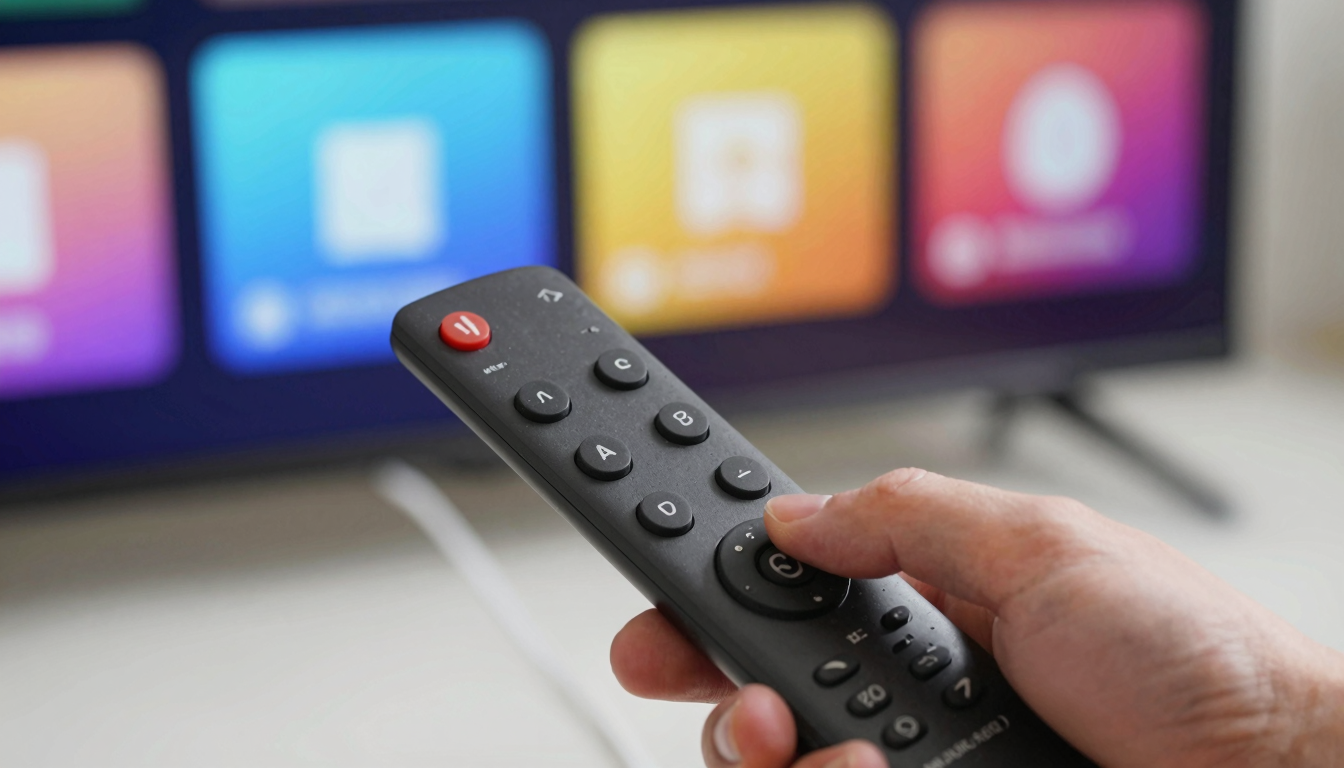
VIP Servers – The Anti-Freeze Technology That Separates Premium from Budget
Server infrastructure is the single most important technical differentiator between a premium IPTV provider UK users trust and a budget service that collapses under pressure. Every other feature — channel count, stream quality, app support — becomes irrelevant if the server cannot handle simultaneous demand during a peak event.
Here is what actually happens on a shared server during a high-demand event: thousands of users connect simultaneously, the server’s available bandwidth per connection drops, and streams begin to buffer, freeze, or drop entirely. The timing is always predictable — major sporting finals, PPV events, bank holiday evenings. These are exactly the moments when you most want a reliable picture.
How Load-Balanced VIP Servers Work
A premium provider solves this with dedicated VIP servers assigned to high-demand content categories. Rather than routing all traffic through a single pipeline, load-balancing distributes connections across multiple servers in real time. If one server approaches capacity, the system automatically shifts new connections to a server with headroom — without you noticing any interruption.
Anti-freeze technology takes this a step further. Instead of waiting for a primary stream to fail before switching, the system monitors stream health continuously and pre-emptively routes you to a backup feed the moment latency increases beyond a threshold. The result is a stream that stays fluid even when the event driving the demand is pulling in hundreds of thousands of concurrent viewers.
What a Premium Content Library Actually Looks Like
Channel counts vary widely across the market. A reputable premium provider lists its offering transparently, broken down by category. The categories that matter most to UK viewers are:
- Live UK TV: The core of what most people want — live channels covering entertainment, news, and general viewing across the UK.
- Sports channels: The largest driver of peak-hour demand. A premium provider with VIP servers handles this reliably where budget services fail.
- Movie channels: Both curated linear channels and on-demand libraries. Look for providers listing VOD counts clearly.
- International channels: Significant for multilingual households. A wide international offering indicates broader server capacity.
- Kids channels: A practical necessity for families — reliable daytime and weekend access matters here.
- PPV events: The clearest test of server quality. A provider that includes PPV events at no extra cost and can stream them without freezing has proven its infrastructure.
British IPTV’s library currently covers 40,000+ live channels and 200,000+ movies and series — all accessible from a single subscription with no add-on fees for sports or PPV. For a fuller comparison of what to look for when evaluating any service, the best IPTV service UK guide is worth reading before you decide.
Privacy and Anonymity – Why Your Viewing Habits Are Your Business Only
Your subscription data, viewing patterns, and payment details belong to you — not to advertisers, data brokers, or third-party analytics companies. A premium IPTV provider should treat your privacy as a default, not an optional extra you have to ask about.
This is an area where the difference between a professionally run service and a hobbyist operation becomes very clear, very quickly.
Payment Methods That Keep Your Subscription Private
How you pay is the first data point a provider collects about you. Premium providers offer flexibility here — not because they expect anything untoward, but because many users simply prefer to keep subscription services off their main bank statements for entirely ordinary reasons: shared bank accounts, budgeting apps that categorise spending, or simply a preference for keeping household subscriptions separate.
Payment options worth looking for include:
- Cryptocurrency: Bitcoin and other options that do not create a direct link between your identity and your subscription.
- Prepaid or virtual cards: Services like Revolut allow you to create a one-time virtual card number specifically for online purchases.
- Gift cards: Widely accepted by reputable providers and available from supermarkets and petrol stations across the UK.
No-Logging Policy and Data Handling
A no-logging policy means the provider does not record your IP address, the channels you watch, or the timestamps of your viewing sessions. This is standard practice among premium services and should be stated explicitly in their privacy documentation.
Beyond logging, look at how your account data is handled. Your email address and device ID are the minimum required to activate a subscription — but a trustworthy provider encrypts this information and does not share it with third parties, sell it to marketing companies, or use it to target you with advertising.
If a provider’s sign-up process asks for more information than strictly necessary to activate your account, that is worth noting. Legitimate services need very little — an email address to send your credentials to, and a payment. Nothing more.
How to Run a Proper Free Trial (Most People Do This Wrong)
A free trial is the most honest evaluation tool available to you. But most people test it at the wrong time, on the wrong device, and then draw conclusions that do not reflect real-world performance. Here is how to do it properly.
The Peak-Hour Test Rule
Test exclusively between 7 PM and 10 PM on a Saturday or Sunday evening. This is when UK internet infrastructure is under maximum load, sporting events are most likely to be running, and the provider’s servers face their greatest concurrent demand. A service that performs well during this window will perform well at any other time. A service that freezes or buffers on a quiet Tuesday afternoon is already telling you something.
A Five-Point Trial Checklist
- Run your speed test first. Confirm your actual peak-hour broadband speed before launching the trial. This rules out your own connection as a variable.
- Use a wired connection. Plug your device directly into the router via Ethernet for the initial test. This isolates the provider’s server performance from your Wi-Fi.
- Test sports and PPV categories specifically. These are the highest-demand streams and the ones most likely to expose a weak server setup.
- Test multiple devices simultaneously. If you plan to use the service on two or three screens at once, test that during the trial — not just on one device in isolation.
- Test the support response. Send a message via WhatsApp or live chat during the trial period. How quickly and helpfully they respond tells you a great deal about what post-purchase support will look like.
A truly risk-free trial should require no payment upfront and give you enough access to complete all five of the tests above. If a provider asks for payment details before granting trial access, factor that into your assessment.
For a structured breakdown of what to check during a trial period, the IPTV free trial UK guide provides a step-by-step checklist. And if you are comparing subscription options before committing, the honest guide to buying IPTV in the UK covers the most common pitfalls in plain terms.

Conclusion
Finding a reliable IPTV provider UK viewers can genuinely count on comes down to a handful of non-negotiable factors: your broadband speed at peak hours, the quality of the provider’s server infrastructure, transparent pricing with no hidden costs, and a free trial that gives you enough time to test all of the above properly.
Budget services have their place, but if you are streaming 4K content, watching sports on Saturday evenings, or running two or three screens simultaneously, the economics of a premium tier make more sense than they might initially appear. The gap between a £12-per-month service that actually works and a £4-per-month service that freezes at kickoff is a gap that cannot be closed with a better router or a faster broadband plan.
Your next step is straightforward: run a speed test at peak hours tonight, decide which device and tier suits your household, and take advantage of a free trial during a high-demand period. That combination of preparation and evidence-based testing puts you in the best possible position to make a decision you will not regret. If you want to explore the full picture before committing, the best IPTV UK guide and the 2026 IPTV subscription pricing guide are both worth a read alongside this one.
📲 Get British IPTV via WhatsApp – 24/7 UK Support
Free trial available. No contracts. Money-back guarantee.
Frequently Asked Questions
What broadband speed do I actually need for a 4K IPTV stream in the UK?
For a single 4K stream during peak evening hours, you need a consistent 40 to 50 Mbps on a wired Ethernet connection. The headline speed on your broadband contract is less important than your actual sustained speed at 8 PM on a Saturday. If you are running two 4K screens simultaneously, plan for at least 100 to 150 Mbps sustained. Wi-Fi introduces variability, so a wired connection is strongly recommended for main TVs.
How do I know if an IPTV provider uses proper VIP servers or shared infrastructure?
The most reliable test is to run a free trial during a peak-hour period — specifically on a Saturday evening between 7 PM and 10 PM when demand is highest. A provider with load-balanced VIP servers will maintain smooth, consistent streams even during this window. A shared-server provider will typically show buffering or freezing during high-demand events. You can also ask the provider directly whether sports and PPV categories run on dedicated infrastructure. A confident provider will answer clearly.
Is a 12-month IPTV plan worth it, or should I start with a monthly subscription?
Start with a monthly plan or a free trial to verify that the service meets your expectations. Once you have confirmed stream quality, server stability, and device compatibility, a 12-month plan offers meaningfully better value — typically locking in a lower per-month rate while retaining full access to premium features. The key is not to commit to a long-term plan before you have tested the service at peak hours on your specific devices.
Which device is best for IPTV in the UK – Fire Stick, Smart TV, or MAG Box?
For new users, the Amazon Fire Stick 4K Max is the most accessible option — easy to set up, capable of 4K streaming, and widely supported by UK providers. A Smart TV (Samsung, LG, or Android TV) is ideal for your main living room if you have a wired Ethernet connection available. MAG boxes are reliable but capped at 1080p and less flexible than modern alternatives. If you are starting fresh, a Fire Stick or Smart TV app setup will serve you better long-term.
How can I protect my privacy when subscribing to an IPTV service?
Choose a provider that offers cryptocurrency, prepaid virtual cards, or gift card payment options to keep your subscription off your main bank statement. Look for an explicit no-logging policy in their privacy documentation — a reputable provider will not record your IP address or viewing history. Your subscription should require only an email address to activate. Any provider asking for significantly more personal information than that is worth approaching with caution.
What is the best way to evaluate an IPTV free trial?
Test during peak hours — specifically Saturday or Sunday evening between 7 PM and 10 PM. Use a wired Ethernet connection. Test the content categories most relevant to you, particularly sports and PPV if those matter to your household. If you plan to stream on multiple devices simultaneously, test that during the trial rather than just on a single screen. Also contact customer support during the trial period to gauge response times and quality. A service that performs well across all five of these checks is worth subscribing to.